
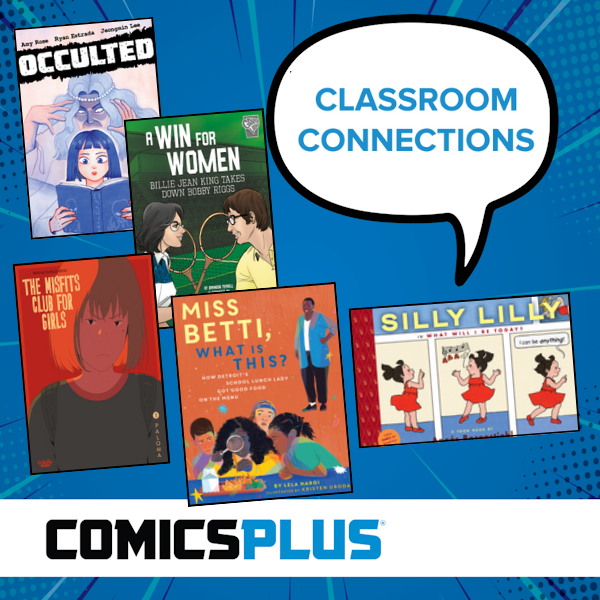
“Classroom Connections” aligns Classroom Standards with comics, graphic novels, manga, and picture books that students will want to read. All titles are available in Comics Plus.
Throughout history, institutions, groups, and individuals have had an enormous impact on society.
Every day we encounter different people — as individuals, or within groups and institutions — interacting with family members, neighbors, and others in our community. These individuals not only influence our daily experiences and understanding of the world, they also help develop our own identities.
Not always as obvious are the groups we interact with, and exchange thoughts and opinions with, like our colleagues at work or school, or those we meet at the gym in the morning. We often share common goals, and we can influence each other — even without speaking. Engaging with different groups can reinforce (or change) our beliefs, and influence our participation in the community.
Meanwhile, we look to institutions for support and structure in our lives — whether they be political, religious, or educational — because they’ve historically garnered respect for the influence and power they wield within our communities, and on our individual experiences.
The NCSS Theme: Individuals, Groups, and Institutions asks students to understand the formation and history of institutions, and to be aware of the challenges they face as they grow and change to meet the needs of people and modern times. There may be discord, accommodations, and conflicts that move some groups to become a stronghold and model for future generations; understanding that, we — whether as individuals or within groups — can make meaningful contributions to assist institutions in their role of organizing and affecting our lives.
This month, our K-12 engagement specialists have selected titles from our Women’s History, Women’s Voices list that celebrate and acknowledge individuals, exalt the strength of groups, and convey the importance of institutions through graphic biographies and memoirs, and a wide range of fiction for readers of all ages.
Young Readers
Silly Lilly in What Will I Be Today? by Agnes Rosenstiehl (TOON Books / Astra)
NCSS Theme: Learners will understand concepts such as: community, culture, role, competition, cooperation, rules, and norms.
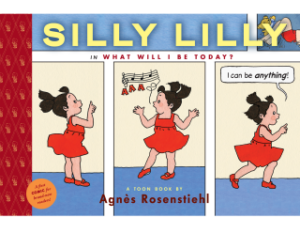 This beginner comic by French author Agnes Rosenstiehl is an excellent depiction of child play and how it is synonymous with the roles and careers of adults. Readers will follow Lilly through the days of the week and discover the many possibilities of her imagination.
Each day’s career/child’s play is shared in seven panels of pure childhood pleasure. The two-page spreads — with pops of red, blue, and French stripes — feature uncluttered scenes and concise wording, supported and enhanced by Rosenstiehl’s adorable illustrations.
Activity: Lilly’s imagination and play highlight the variety of roles in society; readers will enjoy role-playing as her and imagining their own careers. Discuss with students the tools, costumes, and activities for each career depicted in the story and how they influence us. The story also provides an opportunity to review time with the discussion of the days of the week.
Extend the discussion to share the importance of sequential order in comics with the publisher’s lesson plan (PDF) lesson plan.
📚Also consider: Common Core ELA Literature Standard. With prompting and support, describe the relationship between illustrations and the story in which they appear (e.g., what moment in a story an illustration depicts).
- Comics Plus Collection(s): Elementary, Children’s Public Library, All-Access for Schools, Full Collection
Miss Betti, What Is This?: How Detroit’s School Lunch Lady Got Good Food on the Menu by Lela Nargi and Kristen Uroda (Cherry Lake)
NCSS Theme: Learners will understand the impact of families, schools, religious institutions, government agencies, financial institutions, and civic groups on their lives.
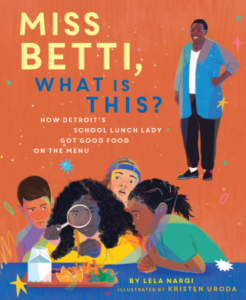 Betti Wiggins is a school cafeteria worker who transformed her school’s lunch program because she believed children deserved better nutrition. Even when she faced resistance, Miss Betti’s determination and commitment to serving well-cooked meals enabled her to successfully introduce nutritious, farm-fresh lunches to students throughout Detroit’s public schools.
Uroda’s artwork is charming and stunning, perfectly complementing Nargi’s telling of Miss Betti’s transformation of Detroit’s school lunch program. The use of vibrant colors inspires hope and imagination, and her artistic style conveys movement with rich color for everyday moments, making ordinary scenes feel extraordinary.
Activity: Teachers can share Miss Betti’s story to explore how government agencies and civic groups directly impact our daily lives. Nargi describes how one person worked within a large institution to change and positively impact the health and well-being of thousands of students in her community. Ask students to retell key details from this real-world example, deepening their understanding of how institutions are composed of individuals who can respond to needs, and effect real improvements in their communities.
To explore the roles institutions may play, the class can create a chart of the services schools offer beyond teaching, starting with the roles outlined in the story and extending the conversation to additional services available at their own school. Encourage students to think about how other civic, governmental, and religious organizations can create positive change in their community, state, and nation.
📚Also consider: Common Core ELA Informational Standard. Identify the main topic and retell key details of a text.
- Comics Plus Collection(s): Elementary, Children’s Public Library, All-Access for Schools, Full Collection
Middle Grade
National Women’s Party Fight for Suffrage by Emily Sohn and Eduardo Garcia (Capstone)
NCSS Theme: Learners will understand that groups and institutions change over time.
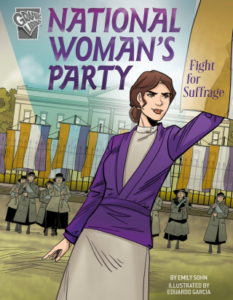 Campaigning for women’s right to vote began in the 1850s with the National American Woman Suffrage Association (NAWSA). Discouraged by slow progress, a resilient group of women formed a bolder organization in 1916: the National Women’s Party (NWP). The history of the NWP is chronicled through the eyes of suffragist Alice Paul and a group of determined women who were the first to ever protest outside the White House — and were later arrested and mistreated by authorities. They strived to bring attention to other women, the nation as a whole, and to force Congress to enact the 19th Amendment.
Garcia uses neutral colors, grounding the topic, with greens framing the action and highlighting scenes, while yellow and purple suggest power. Honest and direct panels portray multiple perspectives of the high emotions of the personalities involved in the influential fight for the 19th Amendment.
Activity: The history of the suffrage movement provides an excellent opportunity to discuss how individuals, groups, and institutions change and respond to the needs of individuals and the group. Students can chronicle the development of NWP and the work of NAWSA, collecting examples of how groups can work together to effect change in a timeline, while also identifying tensions between the two groups. The text opens up space to explain the amendment process, along with the rules and authority of government institutions.
📚Also consider: Common Core ELA Informational Text Standard. Explain events, procedures, ideas, or concepts in a historical, scientific, or technical text, including what happened and why, based on specific information in the text.
- Comics Plus Collection(s): Elementary, Middle School, Children’s Public Library, Teen Public Library, All-Access for Schools, Full Collection
A Win for Women: Billie Jean King Takes Down Bobby Riggs by Brandon Terrell and Eduardo Garcia (Capstone)
NCSS Theme: Learners will understand that when two or more groups with differing norms and beliefs interact, accommodation or conflict may result.
 Terrel recounts one of the most famous moments in sports history: 1973’s “Battle of the Sexes”, an historic tennis match between Billie Jean King — a modern champion fighting for equal pay and respect for women athletes — and Bobby Riggs — a former champion who publicly claimed that women’s tennis was inferior and that he could easily beat any female player. King’s victory in straight sets wasn’t just a personal triumph, but also a defining moment for the women’s rights movement.
Garcia’s artwork brings energy and emotional depth to the event through panels filled with athleticism, and the tension created by each serve and volley. His use of bold, clean lines allows readers to connect with King’s determination and focus, while also conveying Riggs’ showmanship, which defined his public presence in the lead-up to the match. The attention to period detail is outstanding, particularly evident in the 1970s fashion and hairstyles, and vintage tennis equipment. His artwork honors both the athletic achievement and the broader social significance of Billie Jean King’s victory.
Activity: Teachers can use this title to explore how, in the 1970s, sports organizations, and specifically the tennis world, promoted differing norms for female and male athletes. Students can create a chart using evidence from the book to show how the athletes were treated differently. The “Battle of the Sexes” match itself is a perfect case study for discussing how the two groups’ conflicting viewpoints on equality and traditional gender roles challenged institutions and compelled them to revise their policies. Conclude the lesson with an essay assignment asking students to trace and evaluate the argument of the importance of women’s rights and the impact of individuals, groups, and institutions on them.
📚Also consider: Common Core ELA Informational Text Standard. Trace and evaluate the argument and specific claims in a text, distinguishing claims that are supported by reasons and evidence from claims that are not.
- Comics Plus Collection(s): Elementary, Middle School, Children’s Public Library, Teen Public Library, All-Access for Schools, Full Collection
Teens & Young Adults
Occulted by Amy Rose, Jeongmin Lee, and Ryan Estrada (Iron Circus)
NCSS Theme: Learners will understand that ways in which young people are socialized include similarities as well as differences across cultures.
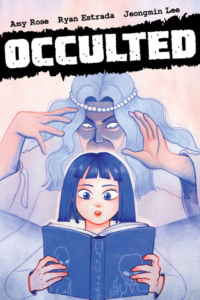 This powerful graphic memoir of Amy Rose’s childhood growing up in a cult in the 1990s starts at “The Temple” at age three, with her parents seeking healing for her mother’s chronic illnesses. Manipulated by the cult’s leader, who believes the world will soon end, Amy is denied access to education and time with her parents. Not until 1997, when the “Heaven’s Gate” tragedy occurred at the age of nine, did Amy learn the word “cult” and begin questioning everything she’d been taught. Through secret visits to an abandoned, off-limits library and access to banned books, she is empowered with the knowledge and courage to recognize and escape the manipulations of the cult and find freedom.
Lee’s black-and-white art evokes haunting, dreamlike qualities, depicting both the oppressive life Amy led in the temple and the freedom she discovers in the outside world. Facial expressions are beautifully drawn, capturing young Amy’s complex emotions of anguish, fear, and a growing disgust with clarity as she learns to assert herself, making the artwork integral to fully understanding this powerful true story.
Activity: Amy Rose’s memoir offers an excellent opportunity for class discussions to explore the socialization and influences of groups and institutions on young people. Students can examine and compare the socialization process within the Temple cult, including their cultural traditions and institutional influences, to understand the distinction between healthy practices and harmful indoctrination. Ask students to consider why Rose shared her story. What is the importance of her discovery of the library, her understanding of the manipulations of the cult leader, and how do they frame and shape her identity and beliefs?
📚Also consider: Common Core ELA Informational Text Standard. Determine an author’s point of view or purpose in a text and analyze how the author acknowledges and responds to conflicting evidence or viewpoints.
- Comics Plus Collection(s): Middle School, High School, Teen Public Library, All-Access for Schools, Full Collection
The Misfits Club for Girls – 1. Paloma by BeKa and Camille Méhu (Europe Comics)
NCSS Theme: Learners will understand how groups and institutions work to meet individual needs, and can promote the common good and address persistent social issues.
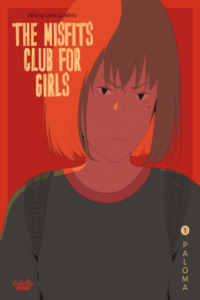 Paloma is in her 15th foster home, and her foster parent challenges her to find at least one friend in the next year; if she does, she can stay. At each year’s end, even though she has not found a friend, the challenge is offered. Not until a “mandatory” study hall invitation does she find a group: The Misfits Club, organized by “Chelonia” — a group of girls who feel they do not fit in with the general school population. Together, they build a safe space to explore their identities, navigate personal challenges, and find friendship.
Méhu’s bold use of color sets the mood for each panel, matching the action and attitude of the characters. The variety of panel sizes and perspectives unfolds the story in bite-sized pieces, with meaningful text and, in some cases, silence, to reveal the intense emotions of the teenage girls.
Activity: BeKa’s short text is a great way to begin discussing how groups and institutions work to meet individual needs and promote the common good. In this first volume, readers will learn a little about each girl in the club, with the focus on Paloma’s story and her reluctance to join the group. It introduces us to her experience with larger institutions, such as social services and the education system. Paloma’s journey into the group will provide an opportunity to analyze how her character develops and advances the story.
📚Also consider: Common Core ELA Informational Text Standard. Analyze how complex characters (e.g., those with multiple or conflicting motivations) develop over the course of a text, interact with other characters, and advance the plot or develop the theme.
- Comics Plus Collection(s): Middle School, High School, Teen Public Library, All-Access for Schools, Full Collection
Radium Girls by Cy and Ivanka Hahnenberger (Iron Circus)
NCSS Theme: Learners will understand the influence of individuals, groups, and institutions on people and events in historical and contemporary settings.
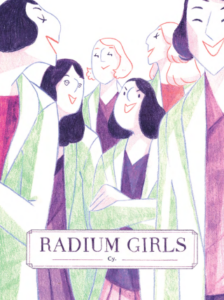 Cy tells the story of young women workers in the early 20th century who painted watch dials with radium paint, known as the “Radium Girls” because of their glowing lips and fingertips. The company instructed its employees to use their lips to hold their paintbrushes for precision work, while withholding information about the risks from the radioactive material.
The women began suffering devastating health effects that included bone deterioration and anemia, and then bravely pursued legal action to seek justice for their suffering while also advancing labor safety standards and workers’ rights. This graphic novel powerfully illustrates their courage in the face of corporate greed and their lasting legacy in occupational health and safety reform, protecting employees today.
Using colored pencils with a deliberately limited color palette, Cy initiates a visual metaphor for the tragedy unfolding through the glowing green of radium against dark purple backgrounds. The elegant artwork creates a sense of impending doom and brings readers into the workers’ world, making the tragedy feel intimate and personal, connecting each reader to the women as individuals, while reinforcing the themes of the era’s glamour and the lurking danger of radiation poisoning.
Activity: Radium Girls shows how individuals can navigate and ultimately transform the institutions that shape their lives. Students can analyze how multiple institutions impacted these women’s lives; how forming a group challenged and reshaped the manufacturing industry; and ultimately, how their voices and actions helped to create OSHA and workplace protections that benefit all workers today. Students can create a timeline to demonstrate the power of collective action to create change in institutional settings, and research contemporary social movements, workers’ rights, and how ordinary people can advocate for institutional reform and change in their own communities today.
📚Also consider: Common Core ELA Informational Standard. Analyze a complex set of ideas or sequence of events and explain how specific individuals, ideas, or events interact and develop over the course of the text.
- Comics Plus Collection(s): High School, Teen Public Library, All-Access for Schools, Full Collection
Vickie Blankenship and Stella Bromley are Engagement Specialists for LibraryPass, as well as school librarians and educators with extensive experience in librarianship at the elementary, middle, and high school levels. Both bring expertise in professional development and educator training, working with school districts nationwide. They have presented locally, regionally, and nationally on best practices for collection development, library programming, and classroom pedagogy. Active members of their state library associations, they are dedicated to fostering a love of reading in students and educators alike. They share a passion for connecting readers with the “just-right” book and believe that reading takes many forms, whether it’s traditional print books, comics, graphic novels, or manga; as long as readers are engaged with a book, their love for reading will grow.
Read All The Comics!

“An absolute game changer.” School Library Journal
With Comics Plus, schools and libraries can offer readers unlimited access to thousands of digital comics, manga, and picture books from popular publishers like ABDO, Andrews McMeel, Capstone, Cherry Lake, Dark Horse, Europe Comics, Fantagraphics, IDW, Image Comics, Kodansha, Lerner, Mad Cave, Manga Classics, Oni Press, Papercutz, Tokyopop, TOON Books, UDON Entertainment, Yen Press, and dozens more.
No holds, wait lists, or monthly borrowing limits—all at a price that won’t break your materials budget.
Learn more at comicsplusapp.com and sign up for a free demo account.
 We curate high-interest, immersive digital content that helps schools and libraries expand and diversify their collections—without breaking their materials budgets.