
“Classroom Connections” aligns Classroom Standards with comics, graphic novels, manga, and picture books that students will want to read. All titles are available in Comics Plus.
How many of us can’t wait to get the latest model of our favorite mobile phone? Or look forward to enjoying the conveniences and features in a brand new car or appliance? It’s incredible to think that many of the things we benefit from today stem from scientific experiments and endeavors designed to meet individual wants and needs — as well as those of society as a whole.
Understanding where and why scientific and technological advancements occur gives us the ability to question ethical concerns about their impact on society, while also understanding where and what our needs may be in the future. The scope of scientific research is broad; it encompasses the natural world, the ever-growing man-made world, and … beyond.
The NCSS Theme: Science, Technology, and Society explores the wonders of science and technology from a historical perspective. It traces the development of tools from their invention to the modifications made over the years, while also examining their incorporation into society, both then and now. Students are encouraged to ask questions and find connections to discover the implications of the evolution of science and technology in their own lives.
Our K-12 engagement specialists have selected titles that showcase amazing inventions and advancements, with a peek into the future. You can find even more STEM/STEAM titles in our curated list, Graphic Nonfiction.
Young Readers
My Guide to Space Exploration: Rover by Samantha Bell and Joseph Hatch (Cherry Lake)
NCSS Theme: Learners will understand that science often leads to new technology in areas such as communication and transportation, and results in change over time.
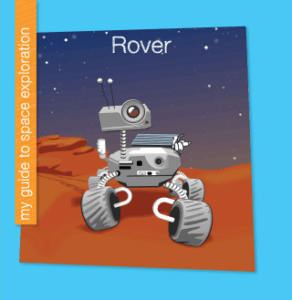 This Early Reader presents information about the role of rovers in space exploration. Bell writes in simple sentences to support emerging reading skills, explaining what a rover does to help scientists explore space, with a glossary and index to support word recognition and a basic understanding of space technology, and reinforce their learning.
Hatch’s illustrations are in full-color, designed to visually engage readers with a combination of vivid drawings and real photographs that depict rovers and other space technology. The blending of illustrations and photographs also reinforces word recognition and understanding of the subject matter.
Teachers can use the simple text and visuals to help young readers understand how rovers utilize technology to explore environments that humans cannot easily access. They can create a chart to compare older model cars, modern automobiles, and the space rovers, highlighting how discoveries in science and technology have transformed and informed advancements in transportation over time.
Explore further with Cherry Lake’s My Early Library: My Guide to Space Exploration series.
📚Also consider: Common Core ELA Standard (Informational Text). With prompting and support, ask and answer questions about key details in a text.
- Comics Plus Collection(s): Elementary, Children’s Public Library, All-Access for Schools, Full Collection
Technology: A Look at Then and Now by Percy Leed (Lerner)
NCSS Theme: Learners will understand that media and technology are a part of every aspect of our lives.
 A nonfiction text for young readers that introduces and defines different types of technology as tools, featuring one sentence for each tool that emphasizes its appearance and function. They will enjoy seeing how the camera, radio, and telephone have changed over time into the modern versions used today.
Each two-page spread features a sepia-toned photograph representing the past and a bright, colorful image highlighting the tool and its user(s) in the present. The photos are uncluttered and straightforward, making them suitable for early readers.
Students will want to spend time evaluating the images of the tools, comparing and contrasting, while questioning how they have evolved and what their impact on society has been. Expand the conversation to encompass the numerous ways that new technologies and advancements continue to influence the way we live.
Look for more titles to share in Lerner’s Read about the Past (Read for a Better World) series.
📚Also consider: Common Core ELA Standard (Informational Text). Distinguish between information provided by pictures (or other illustrations) and information provided by the words in a text.
- Comics Plus Collection(s): Elementary, Children’s Public Library, All-Access for Schools, Full Collection
Middle Grade
Dolly: The 1st Cloned Sheep by Joeming Dunn and Brian Denham (ABDO)
NCSS Theme: Learners will understand science and technology sometimes creates ethical issues that test our standards and values.
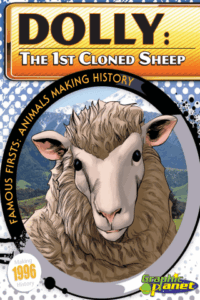 Dolly, the first mammal cloned from an adult cell, narrates her own story, sharing the facts and impact of this historic scientific achievement. Through Dolly, Dunn explores both the significance of the event and the debate it sparked about cloning, while Denham’s illustrations and simple diagrams complement the informative text to fully engage readers as they learn about the basics of cloning.
The artwork is vibrant and features extraordinary details, making complex cloning concepts accessible to young readers. Diagrams of DNA and pictures of the cloning process break down the scientific procedure into understandable steps, making it a fun and informative experience for the reader.
Dolly is a real-world example of how technological advances challenge established standards and values, such as the responsible use of scientific knowledge, the medical benefits and risks of cloning, and how public values influence science policy.
Her story is a valuable resource for teaching the potential of science and technology to raise ethical issues that challenge our values, and can be used as a springboard into a discussion about the scientific achievement of cloning. Students can examine the moral and ethical questions raised by the ability to manipulate life in new ways, and discuss the debates and reactions of the scientific community and beyond.
📚Also consider: Common Core ELA Standard (Informational Text). Trace and evaluate the argument and specific claims in a text, distinguishing those that are supported by reasons and evidence from those that are not.
- Comics Plus Collection(s): Elementary, Middle School, Children’s Public Library, Teen Public Library, All-Access for Schools, Full Collection
Journeying to New Worlds (Max Axiom and the Society of Super Scientists) By Nel Yomtov and Daniel Pedrosa (Capstone)
NCSS Theme: Learners will understand science and technology have been influenced by new advances (e.g., invention of the printing press; conceptions of the universe; application of atomic energy; and genetic discoveries).
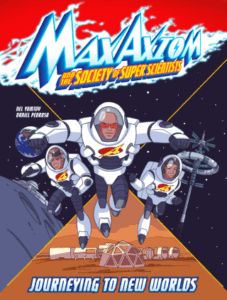 Join Max Axiom and the Society of Super Scientists as they explore the possibilities of space travel, space tourism, and humanity’s relocation to the moon, Mars, or other parts of the universe. Yomtov has Max and his family meet with today’s scientists, space experts, and thrill-seekers to learn about the advances made in spaceship technology, the challenges of long-term stays beyond Earth’s protection, as well as the effects of gravity on human life.
Pedrosa’s varied panel sizes and changes in perspective provide students with the opportunity to consider the significance of the information. Details in the background will encourage them to ask more in-depth questions, creating connections with our current world.
Understanding that the technological advancements of the past become the personal technologies of the present, a brainstorming discussion about scientific innovations required for living on another planet or in space will ignite creative problem-solving skills. By researching the projects referenced in the book, or visiting the listed websites, students will have the opportunity to develop deeper insights into how creative advancements will influence generations to come.
Explore our world and beyond in Capstone’s expansive Max Axiom series, including several topics in Spanish.
📚Also consider: Common Core ELA Standard (Informational Text). Analyze in detail how a key individual, event, or idea is introduced, illustrated, and elaborated in a text (e.g., through examples or anecdotes).
- Comics Plus Collection(s): Elementary, Middle School, Children’s Public Library, Teen Public Library, All-Access for Schools, Full Collection
Teen & Young Adult
Hubert Reeves Explains – 1. Biodiversity by Hubert Reeves, Nelly Boutinot, Daniel Casanave, and Claire Champion (Europe Comics)
NCSS Theme: Learners will understand science and technology have changed peoples’ perceptions of the social and natural world, as well as their relationships to the land, economy, and trade; their concept of security; and their daily activities.
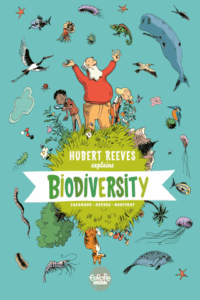 In the first volume of his colorful graphic nonfiction series, Reeves explains how our world is interconnected — from the tiniest microbe to man-made scientific creations and technologies — and how it can all be traced back to biodiversity. He explores the importance of crude oil in our everyday lives; follows the water cycle to learn the significance of clean water to our communities; and discusses the impact of humans on the animal kingdom when we interfere with the balance of nature, whether we mean well or do so accidentally.
Casanave’s panels are filled with landscapes and natural environments that accentuate the scientific details and their connection to our everyday life, while Champion’s color palette ebbs and flows, visually supporting the tone of the subject matter.
Throughout their reading, students can pinpoint examples of how science-based decisions and different technologies have helped transform the natural world, as well as our relationships to the land. Discussions can include the effects on our economy and global trade practices related to how we handle and care for the world’s animals and plants, while Reeves’ examples can be used to initiate research into the current ecological conditions created by humans that affect the Earth’s biodiversity.
📚Also consider: Common Core ELA Standard (Informational Text). Determine a central idea of a text and analyze its development (including how it emerges and is shaped and refined by specific details), and provide an objective summary of the text.
- Comics Plus Collection(s): Middle School, High School, Teen Public Library, All-Access for Schools, Full Collection
Nuking Alaska: Notes of an Atomic Fugitive by Peter Dunlap-Shohl (Graphic Mundi)
NCSS Theme: Learners will understand decisions regarding the uses and consequences of science and technology are often complex because of the need to choose between or reconcile different viewpoints.
 Peter Dunlap-Shohl, who grew up in Alaska, shares stories of near-disasters and government projects like Project Chariot, which aimed to use atomic bombs to build a harbor, the aftermath of the 1964 Great Alaskan Earthquake, and a 1971 warhead test on Amchitka Island. He explains how these events harmed people and the environment, and how close the world came to nuclear catastrophe, which is an important reminder when discussing nuclear threats that persist today.
His artwork resembles political cartoons, employing sketchy lines and exaggerated features to portray historical figures such as Edward Teller and Richard Nixon. The illustrations showcase Alaska’s natural beauty while also depicting bold images of warheads, military sites, and environmental damage. One particularly striking sequence depicts the stages of a nuclear explosion, moving from bright reds to pale colors, capturing both the violence and aftermath of an atomic detonation.
Students and teachers can discuss ethics, risk, and responsibility, recognizing that scientific choices are rarely clear-cut. They can analyze why it is essential to ask questions and consider all perspectives regarding the tensions between scientific ambition and national security, and the concerns of local residents. Indigenous groups, and environmentalists. Because Dunlap-Shohl offers a blend of personal memoir and historical facts, it will encourage students to realize that the uses and consequences of science and technology are often complex, and as a society, we need to include different perspectives, analyze evidence, and reflect on the costs of “progress”.
📚Also consider: Common Core ELA Standard (Informational Text). Analyze a complex set of ideas or sequence of events and explain how specific individuals, ideas, or events interact and develop over the course of the text.
- Comics Plus Collection(s): High School, Teen Public Library, All-Access for Schools, Full Collection
Vickie Blankenship and Stella Bromley are Engagement Specialists for LibraryPass, as well as school librarians and educators with extensive experience in librarianship at the elementary, middle, and high school levels. Both bring expertise in professional development and educator training, working with school districts nationwide. They have presented locally, regionally, and nationally on best practices for collection development, library programming, and classroom pedagogy. Active members of their state library associations, they are dedicated to fostering a love of reading in students and educators alike. They share a passion for connecting readers with the “just-right” book and believe that reading takes many forms, whether it’s traditional print books, comics, graphic novels, or manga; as long as readers are engaged with a book, their love for reading will grow.
Read All The Comics!

“An absolute game changer.” School Library Journal
With Comics Plus, schools and libraries can offer readers unlimited access to thousands of digital comics, manga, and picture books from popular publishers like ABDO, Andrews McMeel, Capstone, Cherry Lake, Dark Horse, Europe Comics, Fantagraphics, IDW, Image Comics, Kodansha, Lerner, Mad Cave, Manga Classics, Oni Press, Papercutz, Tokyopop, TOON Books, UDON Entertainment, Yen Press, and dozens more.
No holds, wait lists, or monthly borrowing limits—all at a price that won’t break your materials budget.
Learn more at comicsplusapp.com and sign up for a free demo account.
 We curate high-interest, immersive digital content that helps schools and libraries expand and diversify their collections—without breaking their materials budgets.